


Include: 54 videos 49 vtt 52 pdfs, size: GB
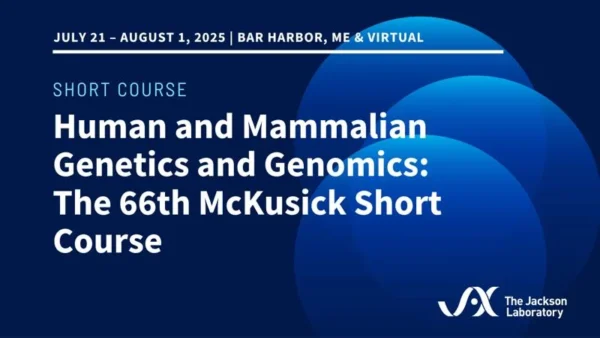
The The Jackson Laboratory “Human and Mammalian Genetics and Genomics: The 66th McKusick Short Course” 2025 is a prestigious, immersive program that combines foundational knowledge with cutting-edge advances in genetics and genomics. Hosted at The Jackson Laboratory in Bar Harbor, Maine, with a virtual attendance option, this two-week course brings together learners and experts from around the globe for a rich educational experience in human and mammalian genetics.
What You Will Learn
-
Fundamental principles of human genetics—including Mendelian and complex disease, genome biology, and the molecular basis of genetic disorders
-
Use of model organisms for dissecting disease mechanisms and exploring genome function
-
Advanced topics such as bioinformatics, population genetics, genome editing, mutagenesis, phenotyping, and the human pangenome
-
How to integrate genetic variation data into diagnosis through tools like OMIM, UCSC Genome Browser, ClinGen, and ClinVar
-
Real-world case studies via the Human Genetics Clinic, highlighting diagnostic applications and clinical impact
Event Details
-
Event: The 66th McKusick Short Course on Human and Mammalian Genetics and Genomics, 2025
-
Dates: July 21 – August 1, 2025
-
Highlights: Morning lectures, afternoon workshops, evening sessions, poster events, faculty lunches, and networking receptions at beautiful Bar Harbor
-
Virtual Access Includes: Live-streamed lectures in the mornings, interactive Q&A, and recorded sessions
Who Should Attend
Advanced undergraduates, graduate students, medical students, genetic counselors, residents, fellows, clinicians, and researchers eager to deepen their understanding of genetics, genomics, and translational medicine.
Why Attend
Elevate your knowledge through direct engagement with global experts, immersive workshops, and real clinical examples. Gain the confidence and practical tools needed to apply modern genomic approaches to research and clinical practice—all while experiencing the collaborative energy of a storied scientific community.
Topics:
Related products
Uncategorized

Uncategorized
Uncategorized

Uncategorized

Uncategorized