

Original release date: April 14, 2025
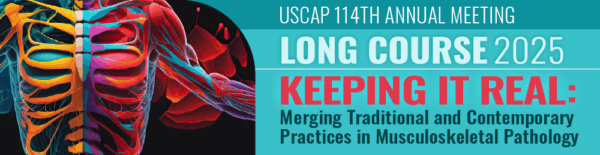
This course will examine a variety of non-neoplastic and neoplastic diseases of the bones and joints, as well as a spectrum of soft tissue neoplasms. In bones and joints, we will tend to focus on more common entities that create diagnostic challenges for pathologists in all practice settings, with a goal of increasing attendees’ diagnostic confidence. For soft tissue neoplasms, we seek to evaluate important changes in diagnostic criteria and recent entities that have been further clarified since the prior Long Course, most of which impact patient management and diagnosis. For each disease reviewed, the most up-to-date histologic and, if applicable, radiographic features/criteria will be discussed; molecular testing, immunohistochemistry and other ancillary techniques will be included as necessary. We also will cover exciting, important and emerging changes in ancillary techniques that we anticipate will soon impact the clinical management of our patients.
Target Audience
Practicing academic and community pathologists, and pathologists-in-training
Learning Objectives
Upon completion of this educational activity, learners will be able to:
- Review the essential diagnostic criteria for common diseases of the bones and joints, both neoplastic and non-neoplastic.
- Provide a practical overview of updated diagnostic criteria of existing neoplasms and newly described entities that have emerged since 2013, emphasizing those that are more likely to impact patient management.
- Discuss important advances in ancillary testing techniques that are anticipated to improve our prognostic and diagnostic capabilities for bone and soft tissue tumors.